


DHT and Hair Fall: Can Ayurvedic Herbs Help Balance DHT? A Modern Science Perspective
July 29, 2026 | 0 Comments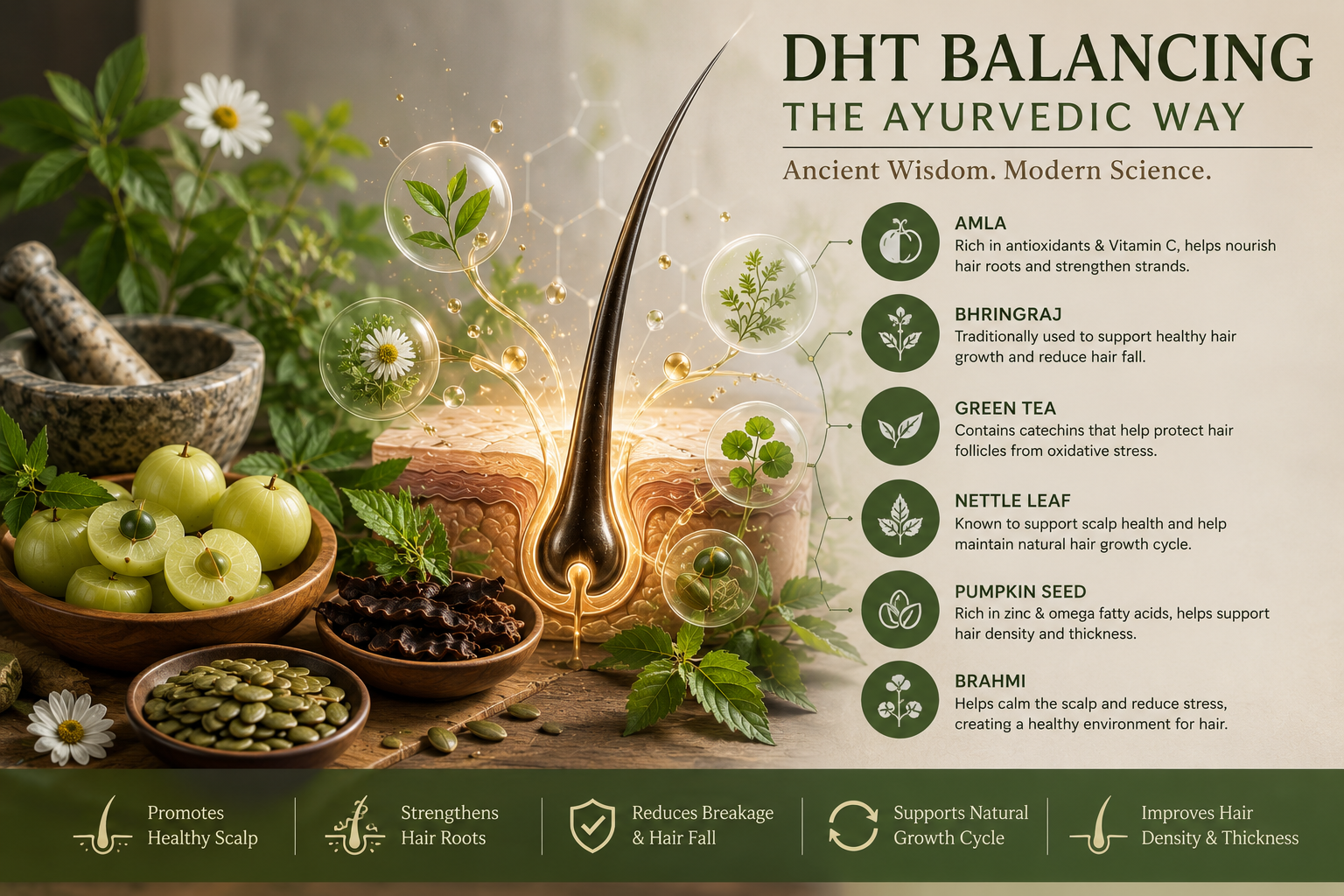
by 11nAfP6aGaQROVO0aZ
DHT Balancing with Ayurvedic Herbs | Natural Hair Care Backed by Modern Cosmetic Science
Learn how DHT affects hair, how Ayurvedic herbs traditionally support scalp health, and how modern cosmetic science is exploring botanical ingredients for healthier-looking, stronger hair.
DHT Isn’t the Enemy. An Imbalanced Scalp Environment Is.
When people experience thinning hair, the first thing they often search is, “How do I block DHT?” But the answer is more nuanced.
DHT (Dihydrotestosterone) is a hormone naturally produced in the body. It plays important roles in normal development and physiology. The challenge is not that DHT exists, but that some hair follicles are genetically more sensitive to it. Over time, this sensitivity can contribute to gradual follicle miniaturization, making hair appear thinner and reducing the duration of the growth phase.
The goal of a thoughtful hair care routine is not to “eliminate” DHT, but to support a healthy scalp environment and help maintain the appearance of fuller, stronger hair.
Understanding DHT Through Modern Cosmetic Science
Hair grows in a cycle consisting of three main phases:
Anagen: Active growth
Catagen: Transition
Telogen: Resting and shedding
In people with hereditary pattern hair thinning, DHT can gradually shorten the anagen phase. As a result:
Hair strands become finer.
Follicles produce thinner hairs over time.
The interval between shedding and regrowth increases.
Hair density may decrease.
While topical cosmetics cannot claim to treat androgenetic alopecia or medically block DHT, botanical ingredients are increasingly studied for their ability to support scalp health, reduce oxidative stress, soothe inflammation, and help create conditions that are more favorable for healthy-looking hair.
Ayurveda’s Perspective: Nourishing the Root, Not Just the Strand
Ayurveda does not describe DHT as a hormone, but it has long recognized that healthy hair depends on the balance of the body’s internal systems and proper nourishment of the scalp (Kesha Bhoomi).
Hair health is traditionally linked to:
Balanced Pitta
Healthy Rakta Dhatu (blood tissue)
Strong Asthi Dhatu (bone tissue, from which hair is traditionally considered an upadhatu)
Efficient digestion (Agni)
Adequate nourishment (Poshana)
Rather than targeting a single pathway, Ayurveda emphasizes restoring harmony through herbs, scalp massage, diet, and consistent daily care.
Ayurvedic Herbs Traditionally Used for Hair Health
Bhringraj (Eclipta alba)
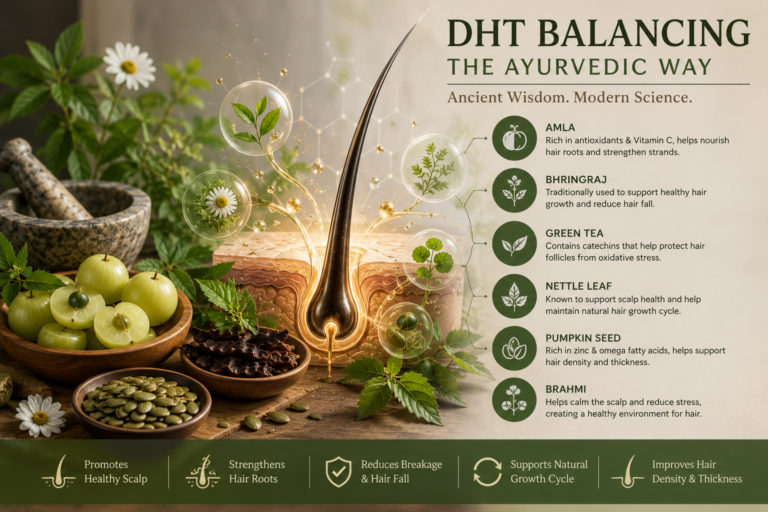
Often called the “King of Hair” in Ayurveda, Bhringraj has been traditionally used to nourish the scalp and support healthy hair growth. Modern studies suggest it contains antioxidant compounds that may help protect hair follicles from oxidative stress.
Supports:
Healthy scalp
Stronger-looking hair
Reduced hair breakage
Amla (Emblica officinalis)
Rich in vitamin C, tannins, and polyphenols, Amla is valued both in Ayurveda and modern cosmetic formulations.
Research highlights its antioxidant potential, helping protect the scalp from free-radical damage while improving the appearance of stronger, shinier hair.
Green Tea (Camellia sinensis)
Green tea is naturally rich in catechins, particularly EGCG (Epigallocatechin Gallate).
Laboratory research has explored EGCG for its interaction with pathways involved in hair follicle biology, although more clinical studies are needed. In cosmetic products, green tea is primarily valued for its antioxidant and scalp-conditioning properties.
Nettle Leaf (Urtica dioica)
Traditionally used in herbal medicine, nettle is rich in minerals including silica, iron, magnesium, and zinc.
Some laboratory research has investigated compounds in nettle for their interaction with enzymes involved in androgen metabolism, but cosmetic products should be understood as supporting scalp wellness rather than altering hormone levels.
Pumpkin Seed
Pumpkin seed contains phytosterols, essential fatty acids, zinc, and vitamin E.
Dietary pumpkin seed has been studied for its potential role in supporting hair density, while pumpkin seed extracts are incorporated into cosmetic formulations to nourish the scalp and hair.
Brahmi
Stress can influence hair shedding by disrupting the normal growth cycle.
Brahmi has traditionally been used in Ayurveda to promote relaxation and scalp comfort. Modern formulations use Brahmi extracts to soothe and condition the scalp.
Rosemary
Although not a classical Ayurvedic herb, rosemary has gained attention in cosmetic science. Some clinical studies suggest rosemary oil may support the appearance of hair density when used consistently, making it a valuable complement to Ayurvedic botanicals in modern formulations.
Why a Healthy Scalp Matters More Than Chasing a Single Ingredient
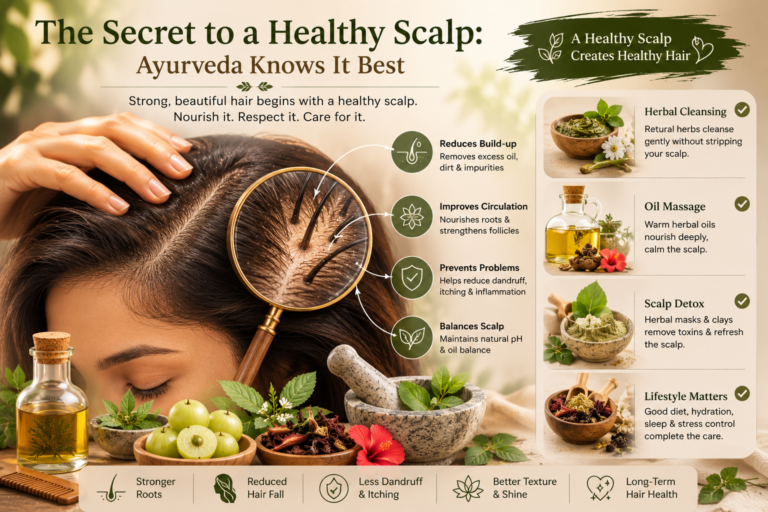
Even the most promising botanical extract cannot perform well if the scalp is overloaded with product residue, excess oil, or irritation.
A healthy scalp environment supports:
Balanced sebum
Reduced buildup
Better hydration
Improved comfort
Stronger-looking hair over time
This is why a complete routine often matters more than relying on one “hero” ingredient.
The Kriveda Biosmetic Philosophy
At Kriveda Biosmetic, we believe that traditional herbal wisdom and modern cosmetic science complement one another.
Our formulations are inspired by Ayurvedic botanicals traditionally associated with healthy hair, while being crafted with modern formulation principles to ensure stability, pleasant sensory experience, and effective daily care.
Our approach includes carefully selected botanical ingredients such as:
Bhringraj
jatamansi
Amla
Green Tea
Nettle Leaf
Pumpkin Seed
Brahmi
sappanwood
Combined with a sulphate-free, paraben-free, and silicone-free cleansing system, these ingredients help maintain a healthy scalp environment that supports stronger, healthier-looking hair.
A DHT-Conscious Hair Care Routine
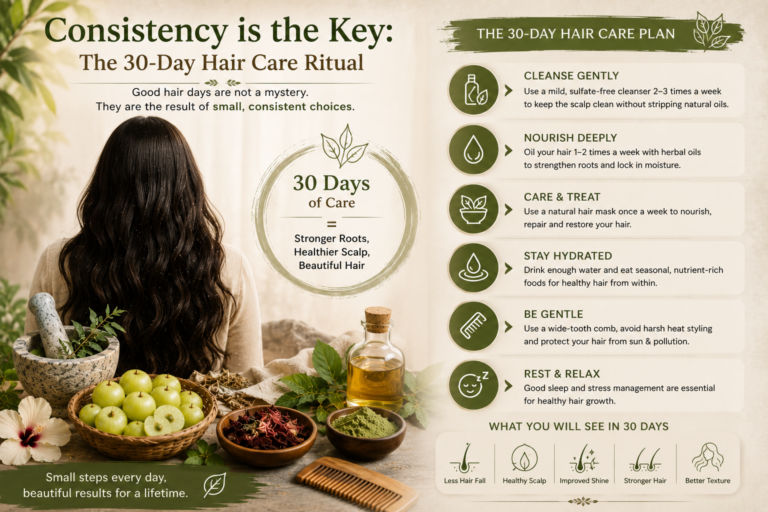
Rather than focusing solely on DHT, consider a routine that supports overall scalp health:
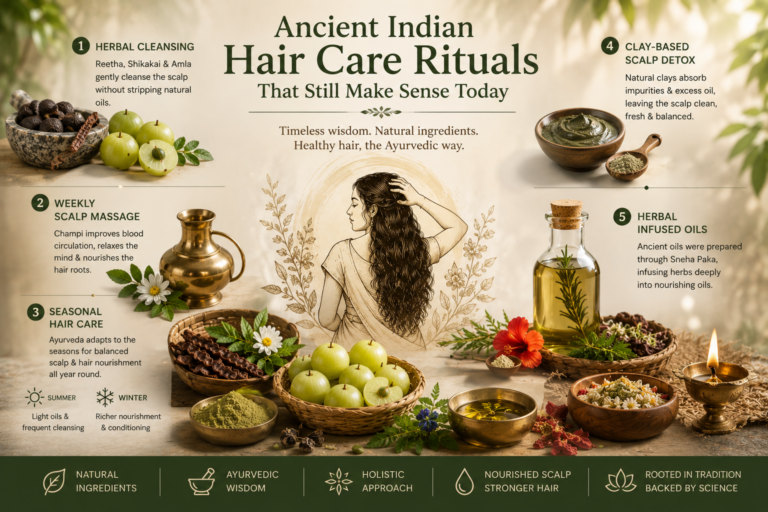
Cleanse regularly with a gentle sulphate-free herbal cleanser to remove excess oil and buildup without disrupting the scalp barrier.
Condition the hair lengths to reduce friction and breakage.
Massage the scalp with a nourishing herbal oil one to two times per week to support circulation and distribute natural oils.
Detox the scalp periodically with a clay-based mask to remove impurities.
Maintain a balanced diet rich in protein, iron, zinc, omega-3 fatty acids, and antioxidants, which are essential for healthy hair growth.
The Bottom Line
DHT is a normal hormone, and genetics play a significant role in how your hair responds to it. While cosmetic products cannot medically treat hormonal hair loss or claim to block DHT, Ayurvedic herbs combined with modern cosmetic science can help maintain a healthy scalp environment, protect hair from oxidative stress, strengthen the hair fiber, and support healthier-looking, fuller hair as part of a consistent routine.
At Kriveda Biosmetic, our philosophy is simple: respect ancient botanical wisdom, validate it with modern cosmetic science where evidence exists, and formulate products that care for both the scalp and the hair with integrity.
FAQ
Q. What is DHT, and why is it linked to hair fall?
DHT (dihydrotestosterone) is a naturally occurring hormone. In people who are genetically sensitive to it, DHT can contribute to gradual miniaturization of hair follicles, leading to thinner hair over time.
Q. Can Ayurvedic herbs block DHT?
Current evidence does not support cosmetic claims that Ayurvedic herbs “block” DHT in humans. However, several botanicals are being studied for their antioxidant, scalp-conditioning, and hair-supporting properties, making them valuable components of a holistic hair care routine.
Q. Which Ayurvedic herbs are commonly used in DHT-conscious hair care?
Bhringraj, Amla, Brahmi, Nettle Leaf, Green Tea, Pumpkin Seed, and Shikakai are among the herbs traditionally used to support scalp health and healthy-looking hair.
Q. Is a sulphate-free shampoo better for DHT-related hair concerns?
A gentle sulphate-free shampoo may help preserve the scalp’s natural moisture barrier and reduce unnecessary irritation, creating a healthier environment for hair, although it does not directly affect DHT levels.
No comments yet.

Comments (0)